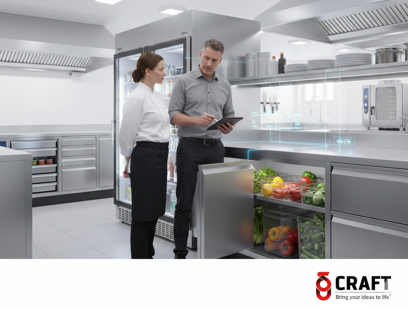
Food storage matters way more than people think about it. Restaurants, grocery stores, catering companies? They’re literally throwing money away every day. Food spoils. Energy bills climb.
The real issue? Standard refrigeration units just don’t work for every situation or space.
That’s where custom solutions come in. They solve these problems directly. Design refrigeration the right way, and your food stays fresher longer while energy costs drop.
It’s not complicated. Just solid engineering that gets results.
Key Principles of Custom Design
Optimized Airflow and Temperature Control
Cold air moving through a cabinet? If it doesn’t circulate evenly, you get hot spots. Some areas are way colder than others.
This causes problems. Inconsistent food treatment. Bacteria growing in warmer zones you didn’t even know existed.
Custom layouts fix this by directing air exactly where it needs to go. Temperature stays steady across shelves and compartments. Everything stays safe, products don’t spoil early.
Different foods need different temperature zones anyway. Tailored design makes that happen without guessing.
Efficient Condensing and Component Integration
The Condensing Unit does the heavy lifting. Pulls heat and moisture out of your cabinet. That’s basically the whole job.
When this component sits in the right spot with proper spacing, it works better and lasts longer. Stick the unit in a bad location? It works harder, burns electricity, wears out faster.
Refrigerated Cabinet Design Consulting helps figure out smart placement for everything. Makes the whole system run smoothly for years instead of breaking down in eighteen months.
Advantages for Food Storage and Preservation
Extended Shelf Life and Reduced Waste
Steady temperatures are game changers. Your produce doesn’t wilt as quickly. Dairy products don’t separate early. Meat stays fresh without that awful freezer burn.
When restaurants throw away less food, they save serious money. Thousands per month sometimes, depending on volume.
Custom builds make this possible because every part of the space works efficiently. Nothing wasted. Inventory lasts longer. Less waste, better profits.
Energy Savings and Cost Reduction
Commercial Refrigerators that are built right cost way less to run. Poorly designed units turn on and off constantly, wasting tons of power.
Custom builds minimize all that cycling. Better insulation, smarter airflow patterns, proper component placement. All working together.
Monthly electric bills get noticeably lower. Over a year? Those savings often pay for the whole upgrade. Pretty solid return.
Practical Applications in Commercial Settings
Different businesses have totally different needs. A kitchen operates way differently than a retail display case.
Bakeries need specific humidity levels. Pharmacies require super precise temperature control. Standard units just don’t cut it across all these situations.
Custom solutions fit what your business actually does. Not some theoretical ideal. You get exactly what you need. Nothing extra, nothing missing.
Bottom Line
Your refrigeration design either works with your operation or fights against it.
Custom setups keep inventory fresh, cut waste, drop energy costs. Not by magic. Just by matching the equipment to what you’re actually doing with it.
Businesses that get this right see results immediately. Food lasts longer. Bills go down. Less product in the dumpster every week.
The setup pays for itself through better preservation and lower operating costs. Not over ten years. Usually within twelve to eighteen months, depending on your volume.
Frequently Asked Questions
1. Why are standard refrigeration units often insufficient for food businesses?
Standard units are built for general use and often struggle with inconsistent airflow, leading to “hot spots” where bacteria can grow. Custom solutions are engineered to your specific space and inventory, ensuring that cold air circulates evenly to keep every item safe and fresh.
2. How much money can a custom refrigeration system actually save?
Savings come from two main areas: reduced food waste and lower energy bills. By preventing produce from wilting and dairy from separating, high-volume businesses can save thousands of dollars monthly. Additionally, because the systems are more efficient, the energy savings alone often pay for the equipment upgrade within 12 to 18 months.
3. What is the role of the condensing unit in food preservation?
The condensing unit does the “heavy lifting” by pulling heat and moisture out of the cabinet. In a custom design, we ensure the unit is placed with proper spacing and ventilation. This prevents the system from overworking, which reduces electricity consumption and prevents the unit from burning out prematurely.
4. Can custom designs handle different types of food in the same unit?
Yes. Different products—like meats, produce, or bakery items—require different temperature and humidity levels. Custom layouts allow for tailored zones that direct air exactly where it’s needed, providing the specific environment each food group requires to stay fresh longer.
5. How does custom design impact equipment maintenance?
Because custom systems are designed with “solid engineering” and proper component placement, they run more smoothly and cycle less frequently than poorly fitted standard units. This leads to less wear and tear, meaning your equipment lasts for years instead of facing major breakdowns after only a few months.